Immersivism, Techspressionism, and The Long Shadow of Flux
In the time cyberspace has existed, its own art movements have emerged.

I once played a tabletop game with my friends that involved alternate realities and strange magic.
Within this game I eventually encountered a woman who sat at a loom, weaving all the players' histories together in one giant tapestry. Everything we did or said in the game became embedded in a never-ending textile work of art.
This is how I view history itself. Everything we do relates back to something someone else did and influences what we create today and tomorrow. This is especially true when speaking about the history of art.
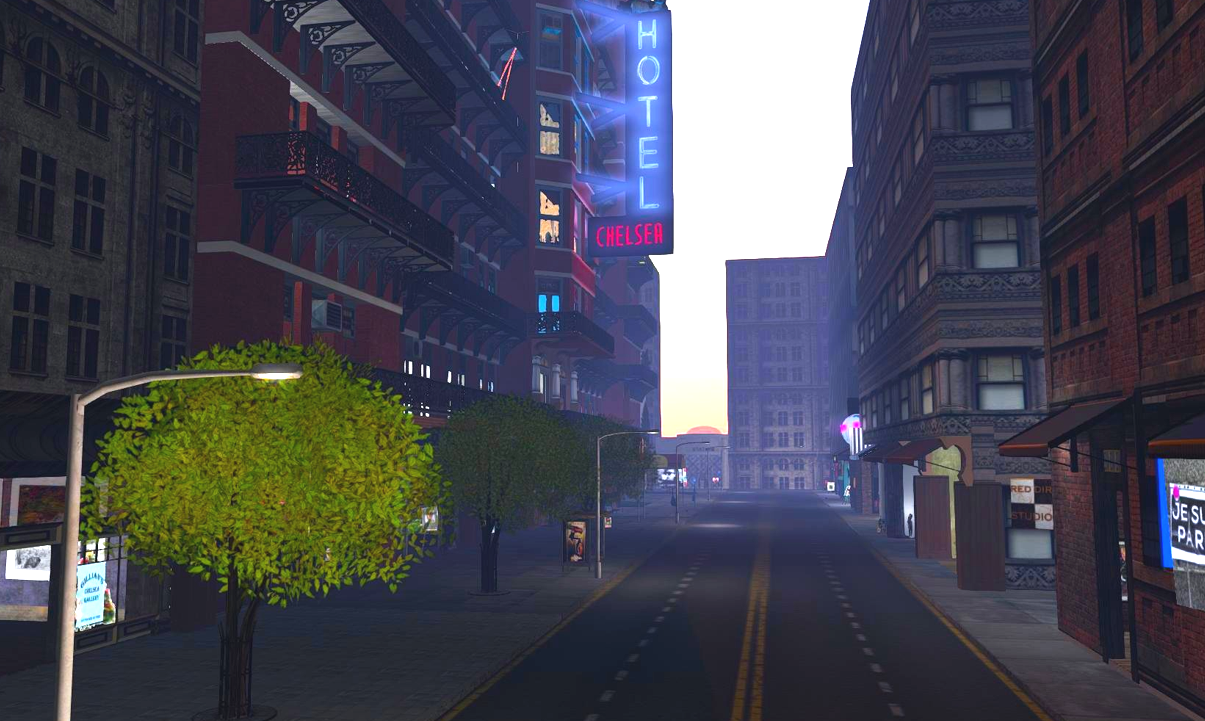
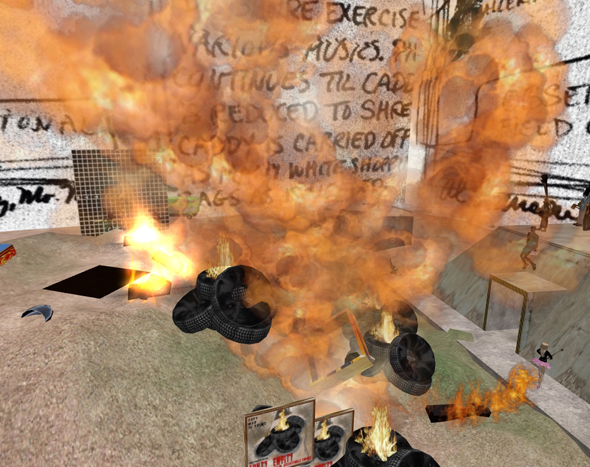
This is a place in cyberspace called Virtual Chelsea.
It exists within the platform Second Life. You can and absolutely should visit and walk around. Look at the exhibits and observe the art. Much of it has been hanging in these galleries for more than a decade now.
Look all the way in the back of the picture above and you might see a billboard dedicated to Andy Warhol. We're not going to be speaking about him too much, but he is a part of that "historical tapestry" this essay is about.
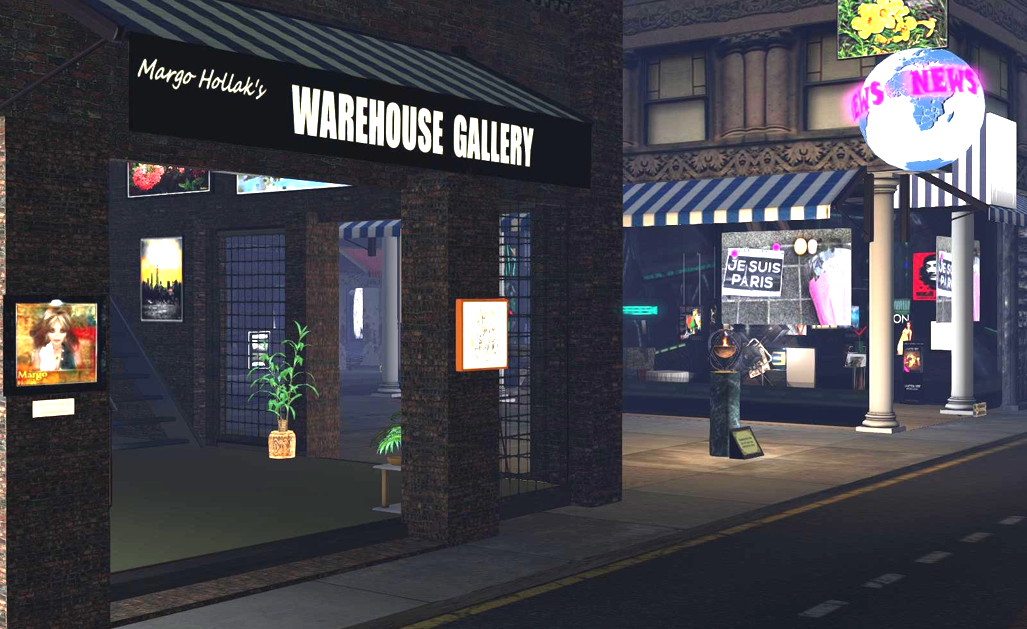
Virtual Chelsea continues to operate and host art events and openings. Their website is here if you're curious and want to visit any of these events.
Naturally, Virtual Chelsea recalls the beatnik era and Warhol's legacy. But the art movement that actually branched out from physical reality and into Second Life wasn't Pop, it was Flux.
A Brief History of Fluxus
Fluxus, which is also called "Flux" for short, is an avant-garde art movement which emerged in the 1960s. Founded by George Maciunas, Flux exists as a network of artists who engage in art experiments, happenings, and other projects under the Flux name. While Flux has no unifying art style, its promotion of community and exploration influences its projects.
The community has existed for decades and many artists have contributed to its development. You can learn about some of them here.
It's important to note that Flux is not just an art movement, but musical as well (part of what originally inspired the Fluxus movement was the work of John Cage!). Not only have there been concerts called Fluxfests which took place across Europe in the 1960s, but even artists such as Yoko Ono have been practicing Fluxists.
Fine Art Meets Virtual Reality
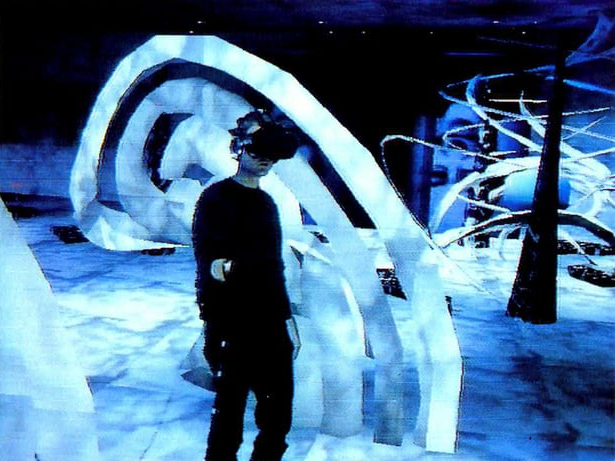
During the 90s, virtual reality experienced its first consumer wave. While it didn't last, it did attract experimental artists who created work within digital space. These artists, including Nicole Stenger, Char Davies, and Dr. Steve Guynup, created the first pieces of art we now consider part of Immersivist art history.
You can learn about these artists here and see some of their work.
Bibbe Hansen, Patrick Lichty, and Second Front
VR shuttered at the end of the 90s due to lack of commercial growth, but in its place arrived commercial virtual worlds. Founded in 2003, Second Life grew to accommodate early users and fine artists who were interested in developing work in cyberspace.
Bibbe Hansen, daughter of Fluxist Al Hansen and Warhol Factory alum, joined the art group Second Front with RTMark alum Patrick Lichty. Together they recreated Al Hansen's "Car Bibbe" performance and expanded it to virtual performance and film. Both artists would go on to produce various shows and performances within Second Life and are still active there as of this writing.
Patrick Moya's Proto-Immersivist Wonderland
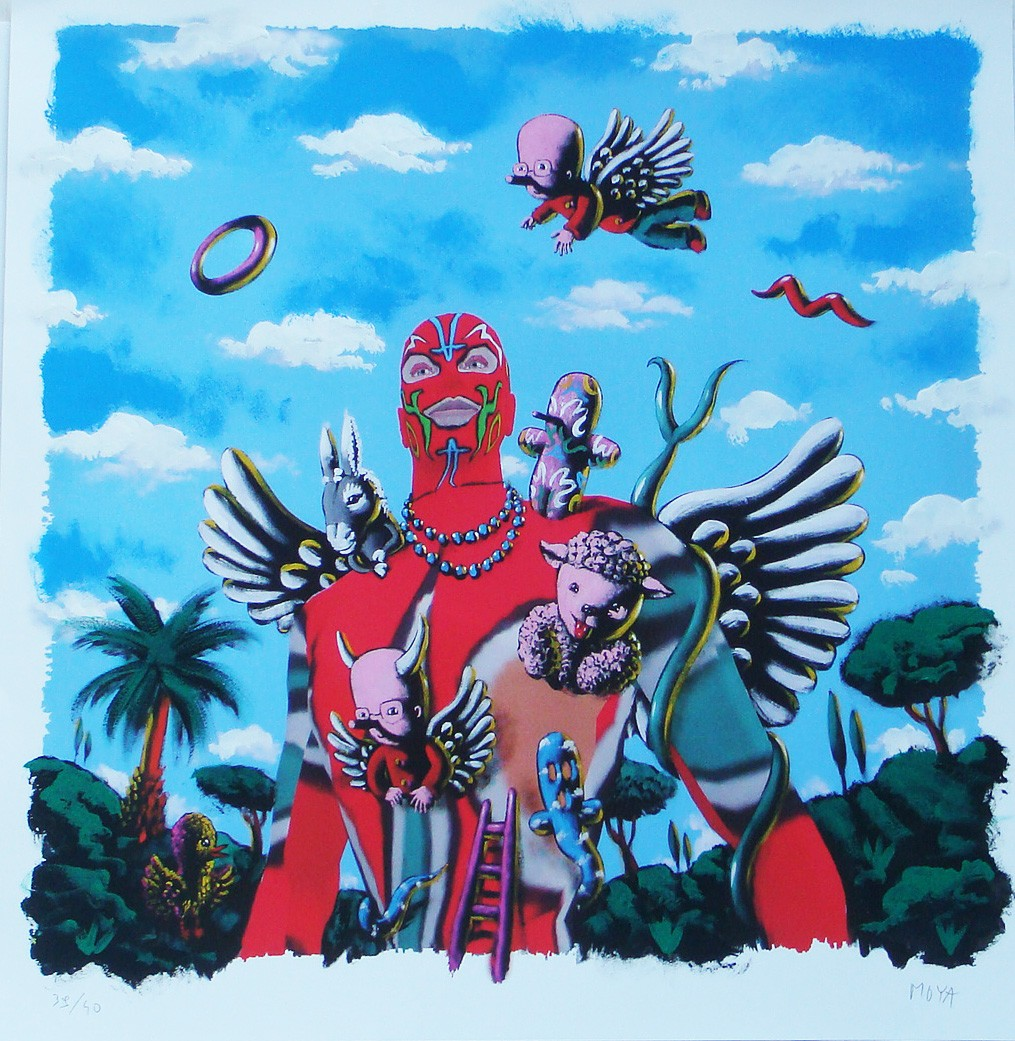
Another painter who became active within Second Life during this time is Patrick Moya. Moya is a French artist whose colorful paintings illustrate his imaginary and digital self with other characters he paints and draws into his world. More importantly, Moya pioneered the practice of printing out pictures of his virtual avatar and adding acrylic brushstrokes to them. The above image is one print of his work that's still for sale.
Moya is an artist who helped to pave the way for modern Immersivist style. He openly paints his avatar, makes sculptures of his work, and creates exhibitions of his art both in virtual worlds and in physical galleries. He is active in most platforms in cyberspace if there is an ability to upload custom maps there.
Bryn Oh's "Immersiva"
In the 2010s Second Life was enjoying a healthy fine art scene, but no one had an exact name for all of it. Most people only knew of sculpting within Second Life; that's a tradition still at work with art collectives such as Sandbox Not Found, who host "Prim of the Week" competitions to encourage artists to create fine art from in-game resources.
If you talked to an artist and asked what their work is, they would probably respond "virtual photography", "virtual sculpture", or something else; there was no word for paintings depicting virtual avatars or virtual worlds.
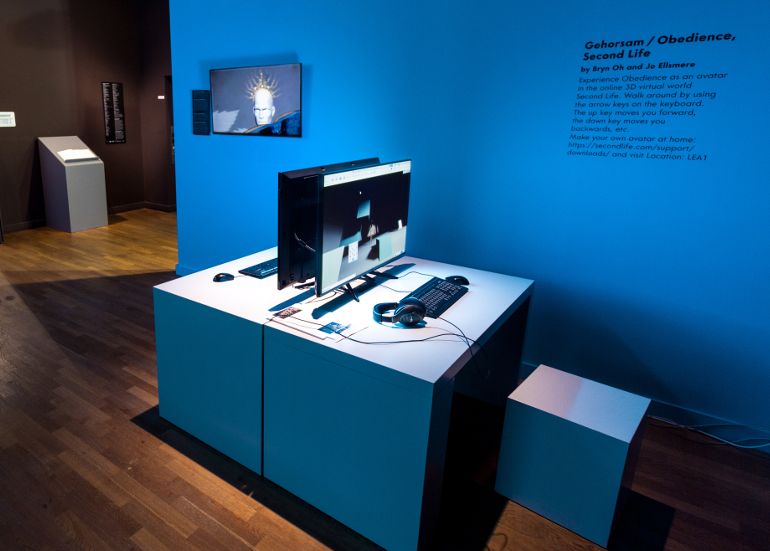
Bryn Oh helped to give a name to the general practice of making cyberspace-themed sculpture and paintings by naming her personal sim "Immersiva", that name also covered her art. She has given interviews and lectures about Immersiva and has been active both online and has enjoyed exhibitions in real-world museums.
She is one of the most commercially successful Immersivists so far aside from Patrick Moya. Both artists claim painting and sculpture as a skillset along with expertise in building virtual worlds and immersive experiences.
You can read an interview here about her work.
"Virtual Girl", The Strange Pear, and Immersivism
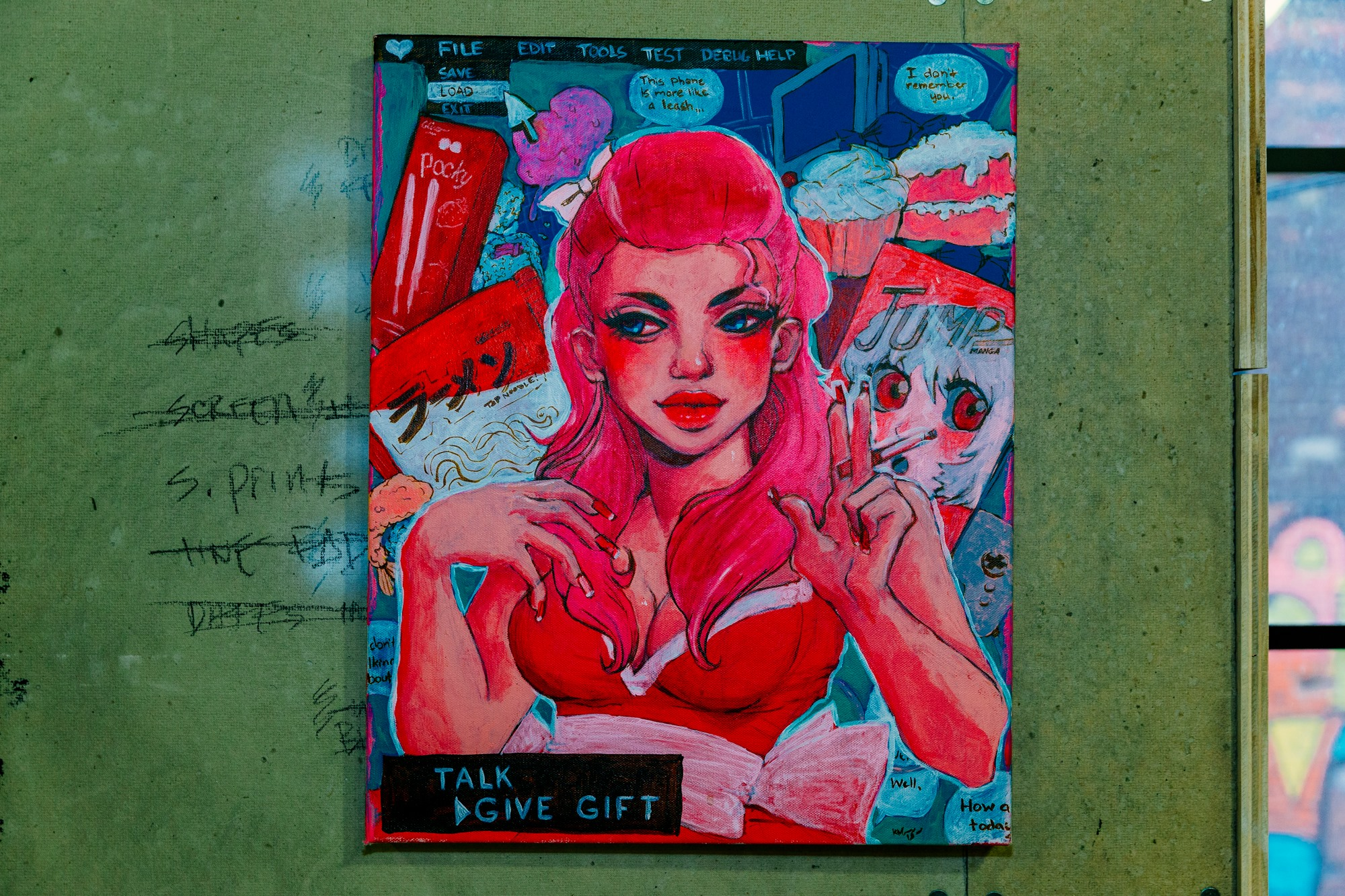
In the 2010s I was a young painter growing up in Detroit. I spent my time either showing work around Detroit's art galleries or hanging paintings on digital walls in Second Life. In 2015 I won a fellowship through Red Bull House of Art Detroit, and decided to paint Second Life avatars for the collection in various stylish images. My collection was called "Virtual Girl"; the paintings were popular even when it was obvious I was depicting the internet on canvas.
After my debut, I spoke to Bryn Oh with the realization we were both painting avatars. It wasn't a common art practice back then but we both knew it could lead to something bigger.
After some years of research, I requested a talk about the need for a movement name to be chosen at The Strange Pear, a virtual salon located in VRChat run by artist Oz Pearsall. Working with new VR equipment, I showcased different experiments to explain how we didn't just have paintings and sculpture as a medium to play with anymore, but could take the art even further with mixed reality and blind contour skill to advance the practice. Afterwards there was a vote where the movement name "Immersivism" was ultimately chosen.
Bryn and I became "cofounders" in that we combined our theories and research to help push the movement forward.
The "Close Cousin", Techspressionism
Immersivism was not the only art movement emerging during this time.
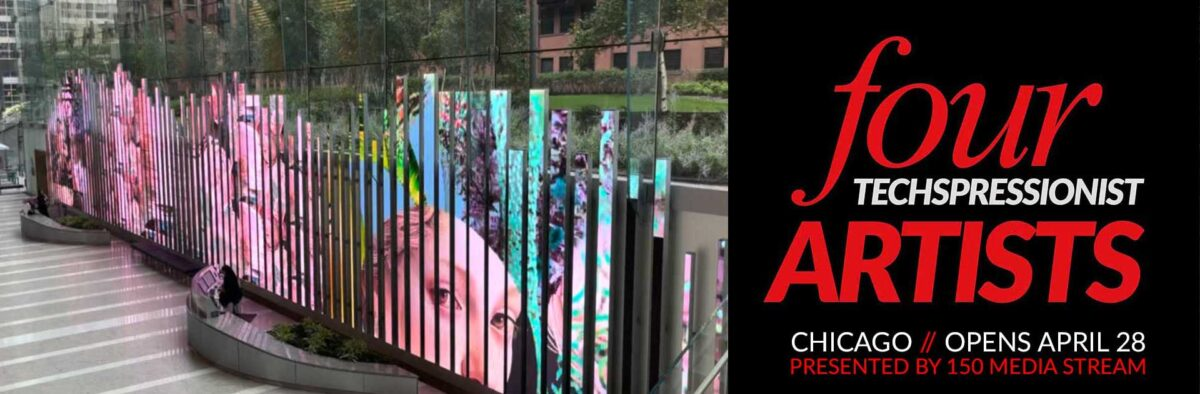
While Patrick Lichty has been in virtual spaces and helping to found early Immersivist-style art, he's also helped to launch other tech art movements such as Techspressionism. First used as a term by Colin Goldberg for an exhibition of work in New York, Techspressionism is described as "an artistic approach in which technology is utilized as a means to express emotional experience". Where Immersivism is inspired by Impressionism, Techspressionism is directly inspired by Expressionism.
You can read more about Techspressionism here.
ReVerse Butcher Brings Immersivism To Australia
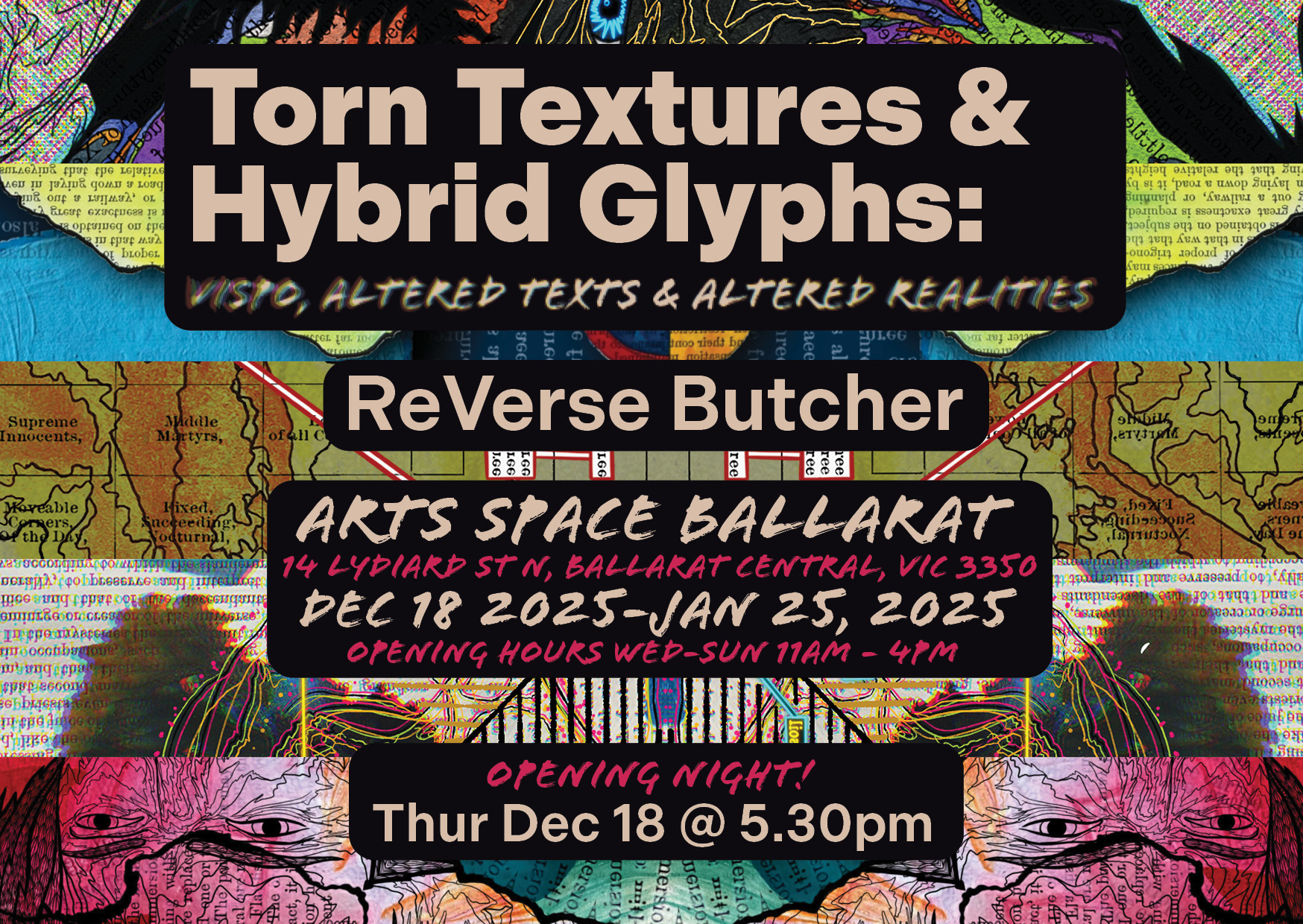
ReVerse Butcher is an artist who sculpts virtually, paints physically, and translates texture and scanned art between the two. She then mixes her art with immersive exhibits and poetry, called VISPO, to bring new worlds to gallery visitors.
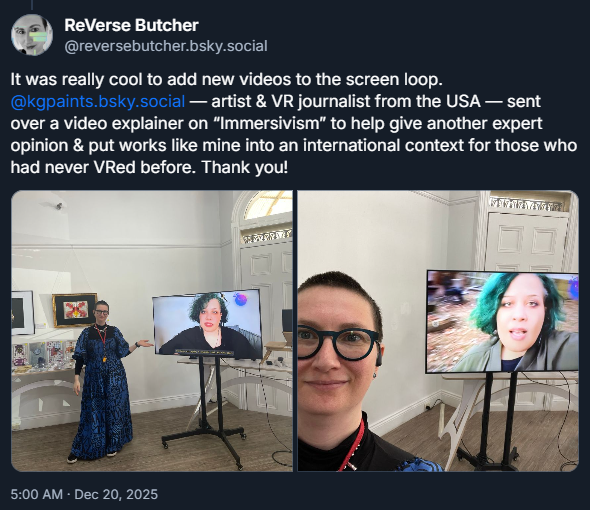
In 2025 she debuted a gallery collection of paintings, previously used for virtual sculpture, to hang on walls to show the level of detail involved in her work. With this exhibit was an explainer video of Immersivism for guests to watch and learn about the emerging art movement.
In terms of engagement style, ReVerse Butcher resembles Patrick Lichty. She engages with different communities to learn, engage, and contribute insight to as Lichty has with Second Front and Techspressionism.
The Tapestry Binds Us All
Writing all of this history out really brings to mind how art history--any history, really--is a constant flow of events that overlap with one another. That's the tapestry that binds us. When I was "growing up" in Second Life, I got to attend Second Front art shows and knew Bibbe Hansen through Facebook and online. I rode around with Patrick Moya as he piled he and I in a car with his friends to show off his virtual galleries, and I'm still friends with Bryn as I keep her updated about different things Immersivists are doing.
These days when I check social feeds dedicated to fine art, I see friends from Immersivism, Second Life, VR, post-net, and Techspressionist artists and beyond all post their work and interact with one another.
The story continues as the tapestry expands ever on. I have no idea where things will lead from here, but I'm happy to have done my part to keep things going and hopefully influence the next generation of artists.